Colorado I-70 Traction Law Explained for Visitors (2026 Rules)
Colorado's traction law in plain language: when it applies on I-70, the 3/16 inch tire rule, why AWD alone is not enough, rental cars and the fines.
If you are driving from Denver to the ski resorts between September and May, Colorado's traction law can apply to you, and many visitors find out the hard way, with a rental car on summer tires and a citation on Floyd Hill. This guide explains the law in plain language, based on the rules published by the Colorado Department of Transportation: where and when it applies, what your vehicle needs, what the fines are, and what to do if you would rather not drive I-70 in winter at all.
What Is the Colorado Traction Law?
The traction law is a set of minimum equipment rules for vehicles on Colorado mountain highways in winter conditions. Its goal is simple: stop under-equipped cars from spinning out, blocking lanes and closing the highway for everyone else. The rules are set by the Colorado Department of Transportation (CDOT), which can put them in place on any state highway.
During severe winter storms, CDOT steps up to the passenger vehicle chain law, which it calls "the final safety measure before the highway is closed." Under the chain law, every vehicle must have chains or an approved alternative traction device.
Where and When It Applies on I-70
On I-70 between Morrison and Dotsero, from September 1 to May 31, CDOT can enforce the traction and chain laws with fines. It puts the passenger vehicle traction law in place during winter storms or whenever conditions require it. That stretch covers the whole drive from the Denver foothills to Vail, Beaver Creek and Breckenridge, and well past them toward Glenwood Springs.
CDOT can also activate it on any other state highway. When it is active, you will see it on highway signs, on COtrip.org and in CDOT's road condition alerts, which you can receive by text or email.
What Your Vehicle Needs
When the traction law is active, every passenger vehicle needs one of these:
- Winter tires (the mountain and snowflake symbol) with at least 3/16 inch of tread, or
- Tires marked mud and snow (M+S or M/S) with at least 3/16 inch of tread, or
- Tires rated "all weather" with at least 3/16 inch of tread, or
- Chains or an approved alternative traction device, such as an auto sock.
All-wheel or four-wheel drive is not enough on its own. Older guides list it as a way to comply, but CDOT's current rules do not: they list only the tires and traction devices above. CDOT "highly recommends driving an AWD or 4WD vehicle in the mountains whenever possible," on top of the right tires. An all-wheel drive SUV on worn or summer tires does not comply.
To check the tread, use a tread depth gauge from any auto parts store. 3/16 inch is about 4.8 millimeters.
What Are the Fines?
According to CDOT, failing to comply carries a $100 fine plus a $33 surcharge. If it leads to the closure of a travel lane in one or more directions, the penalty can rise to a $500 fine plus a $157 surcharge. The bigger cost is usually the hours lost: one stuck car on a climb can stop traffic behind it for a long time.
The Rental Car Problem
Most visitors fly into Denver International Airport and rent a car. The catch is that an all-wheel drive rental is not automatically compliant: what counts is the tires, and not every rental car has tires marked M+S, M/S or the mountain-snowflake symbol. Before you drive out of the rental lot:
- Look at the tire sidewall for the M+S, M/S or mountain-snowflake symbol.
- Check that the tread is at least 3/16 inch deep.
- If the tires do not qualify, ask for a different car. It is far easier at the counter than on the side of I-70.
- Take all-wheel or four-wheel drive if you can get it, as CDOT recommends, but not instead of the right tires.
Tips for Driving I-70 in Winter
- Check conditions before you leave. COtrip.org shows closures, chain and traction law status and traffic cameras.
- Avoid peak hours. Westbound traffic is heaviest on Friday afternoons and Saturday mornings, eastbound on Saturday and Sunday afternoons.
- Expect metering at the Eisenhower Tunnel. In bad weather CDOT holds traffic and releases it in groups.
- Keep your tank above half and pack water and warm layers. A closure can leave you stopped for a long time.
- Leave space. Stopping distances on packed snow are several times longer than on dry pavement.
Prefer Not to Drive?
Plenty of visitors decide the mountain drive is not how they want to start a ski trip. The alternatives are a shared mountain shuttle, the Bustang bus, or a private car service with a chauffeur who drives the corridor all season.
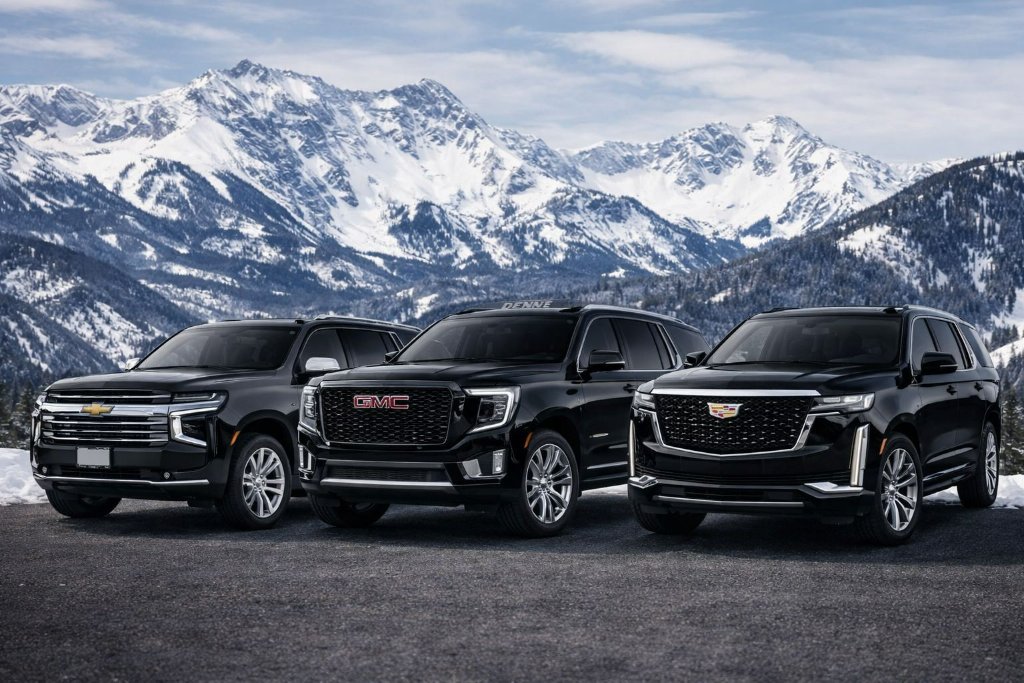
Luxury Rides Denver drives the corridor in all-wheel drive SUVs, the kind of vehicle CDOT recommends for the mountains, and our chauffeurs check CDOT conditions before and during every mountain trip. If a pass closes, we wait somewhere safe or take an open route rather than push through. Compare the options in our guides to getting from Denver airport to Vail and from Denver airport to Breckenridge, or see all resorts on our ski resort transportation page.
Other Mountain Roads Visitors Drive
I-70 gets the attention, but several popular trips leave it for steeper roads where winter conditions can be worse:
- US-40 over Berthoud Pass to Winter Park. The pass tops out above 11,000 feet with switchbacks on both sides and is among the first roads to close in a storm. Our Denver to Winter Park page covers the drive.
- Highway 9 from Frisco to Breckenridge. A short, easier stretch, but it ices in shaded sections.
- US-6 over Loveland Pass. The alternative to the Eisenhower Tunnel, and the route vehicles carrying hazardous materials must use, high and exposed in winter.
- Vail Pass on I-70. Between Copper Mountain and Vail, it is one of the places CDOT most often closes the interstate.
CDOT can activate the traction law on any of these during a storm, and the same equipment rules apply.
Chains and Traction Devices, Explained
Chains are metal links that wrap around the tire for grip on snow and ice. Alternative traction devices, such as fabric auto socks, do a similar job and are easier to fit. Under the traction law they are one way to comply. Under the chain law, used only in severe storms, every vehicle must have them. CDOT publishes the list of approved alternative traction devices on its traction law page. If you carry them, practice fitting them once at home: doing it for the first time on a dark, snowy shoulder of I-70 is miserable.
A Rental Car Checklist for Winter Trips
Before you leave the rental lot at Denver International Airport:
- When you book, ask for a car with winter or M+S tires. All-wheel drive is a bonus, not a substitute.
- Check the tire sidewalls for the M+S, M/S or mountain-snowflake symbol.
- Check the tread: at least 3/16 inch, about 4.8 millimeters.
- Make sure the windshield washer fluid is full; road spray on I-70 coats the glass quickly.
- Check COtrip.org for conditions and closures before you set off.
Frequently Asked Questions
Is the traction law always in effect on I-70? Not all the time. On I-70 between Morrison and Dotsero, CDOT can enforce it with fines from September 1 to May 31, and it activates the law during winter storms or when conditions require. Highway signs and COtrip.org show when it is active.
Does all-wheel drive meet the traction law? Not on its own. CDOT's current rules require winter, M+S, M/S or all-weather rated tires with at least 3/16 inch of tread, or chains or an approved alternative traction device. CDOT recommends AWD or 4WD in addition to the right tires.
What is the difference between the traction law and the chain law? The traction law sets minimum tire or traction device rules. The chain law, used in severe storms as the last step before closing the highway, requires every vehicle to have chains or an approved alternative traction device.
What happens if I get stuck without the right tires? You can be cited: a $100 fine plus a $33 surcharge, or up to a $500 fine plus a $157 surcharge if it leads to a lane closure.
Do rental cars come with snow tires in Colorado? Not always. Check the tire markings and the tread before leaving the rental lot. All-wheel drive alone does not make a car compliant.
Is there a way to get to the ski resorts without driving? Yes: shared shuttles, the Bustang bus or a private car service. Our Keystone, Copper Mountain and Winter Park pages list distances and drive times for each.
Sources
- Colorado Department of Transportation, Passenger Vehicle Traction and Chain Laws: when the laws apply, tire and traction device requirements, fines and the list of approved alternative traction devices.
- COtrip.org: live road conditions, closures and active traction or chain laws.
Checked against CDOT's published rules in November 2026. Rules can change; check CDOT and COtrip before you travel.